
Method: Follicular Unit Transplantation
Approach: Doctor-led Procedure
Surgeons: GMC, ISHRS Registered
Cost: £4,000 – £8,000+
Grafts: Based on patient’s hair loss
FUT Hair Transplant




GMC-Registered Surgeons
Every procedure at Hair Transplant Leeds is performed by a doctor on the GMC register
Leeds City Centre Clinic
Centrally based and easy to reach from across Yorkshire and the surrounding region
Free Consultation, No Sales Pressure
An honest look at your hair loss and what surgery can realistically achieve for you
One Surgeon, One Patient Per Day
Your surgeon focuses solely on your procedure, undivided attention from the first incision to the last graft
At Hair Transplant Leeds, FUT (Follicular Unit Transplantation) is offered alongside FUE for patients where the strip method is clinically the right choice. Dr Aziz Elgindi is one of a small number of UK surgeons still actively performing FUT, and it remains a valid option for specific patients. This page explains who it is suitable for, how it works, and how it compares to FUE.
FUT Hair Transplant in Leeds
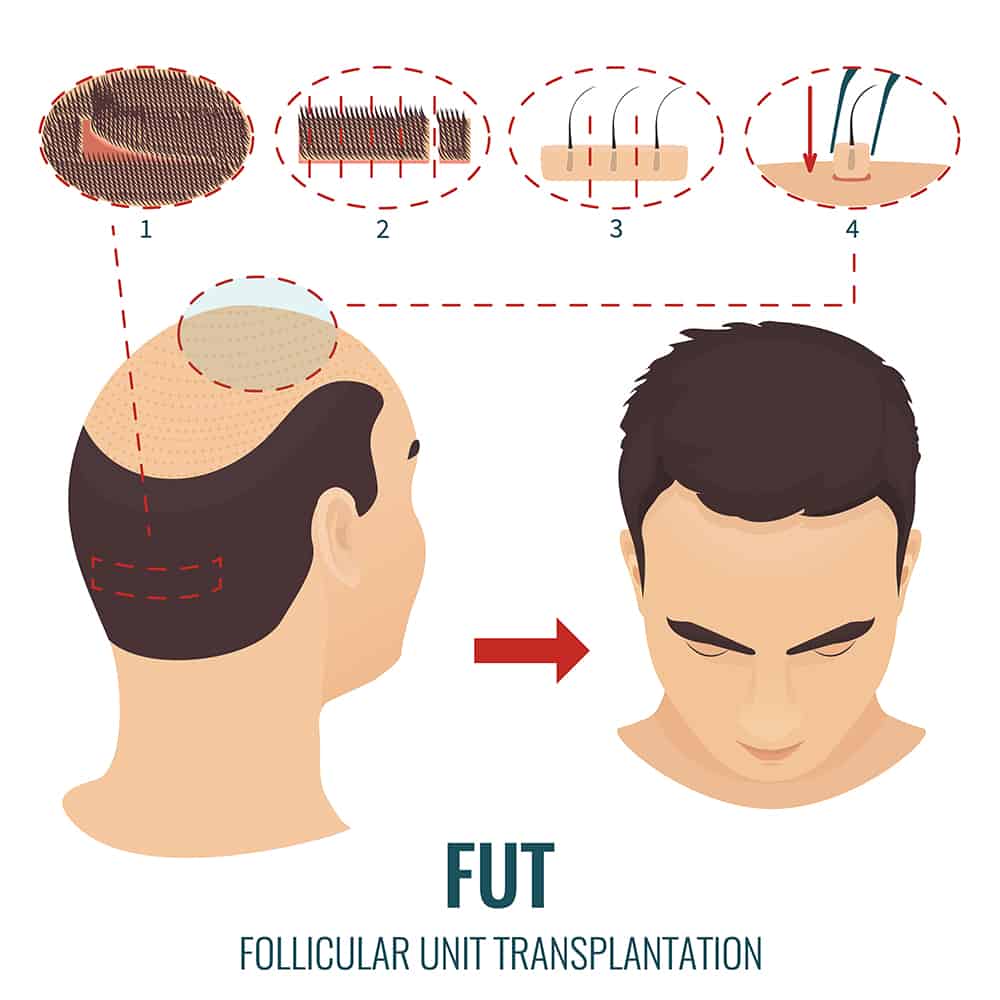
FUT, also known as the strip method, involves surgically removing a narrow strip of scalp from the donor area at the back of the head. The strip is then dissected under microscopes by the surgical team to harvest individual follicular units. Those units are implanted into the recipient area using the same incision-and-implantation process as FUE.
The key difference from FUE hair transplant is in the extraction method. FUE extracts follicles one by one using a punch device; FUT removes a linear strip. Both achieve the same endpoint: harvested follicles implanted into areas of thinning or loss.
FUT is particularly suited to patients who keep their hair long and will cover the donor scar, or patients who need a very large graft count in a single session that would be impractical to achieve through FUE alone.
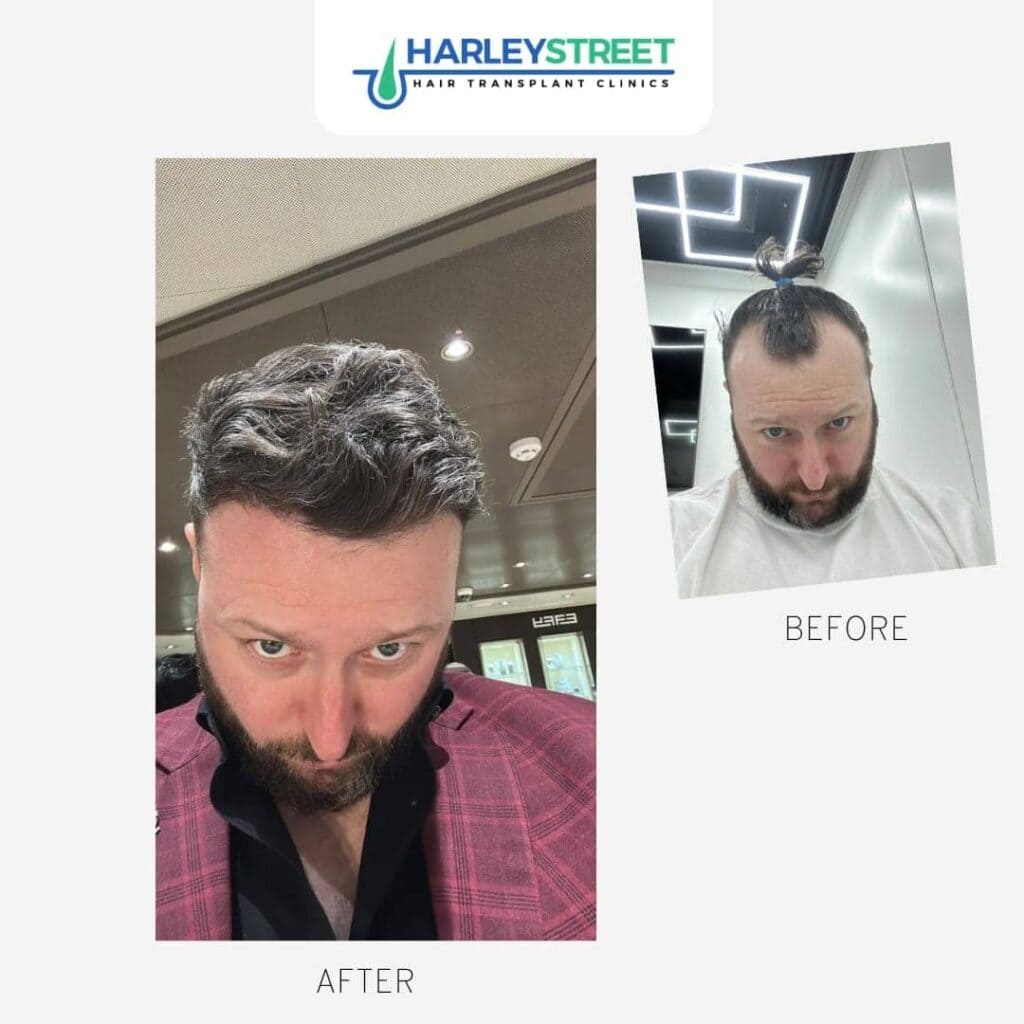
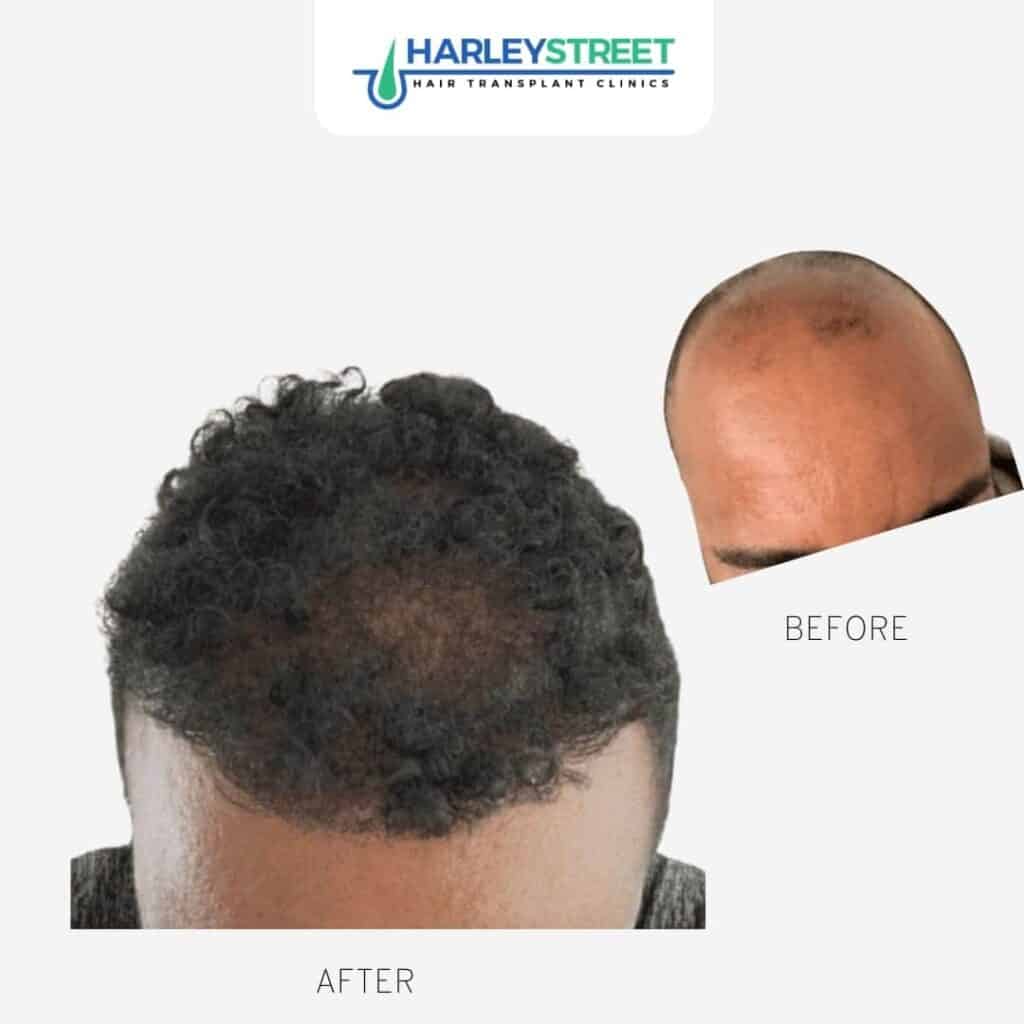
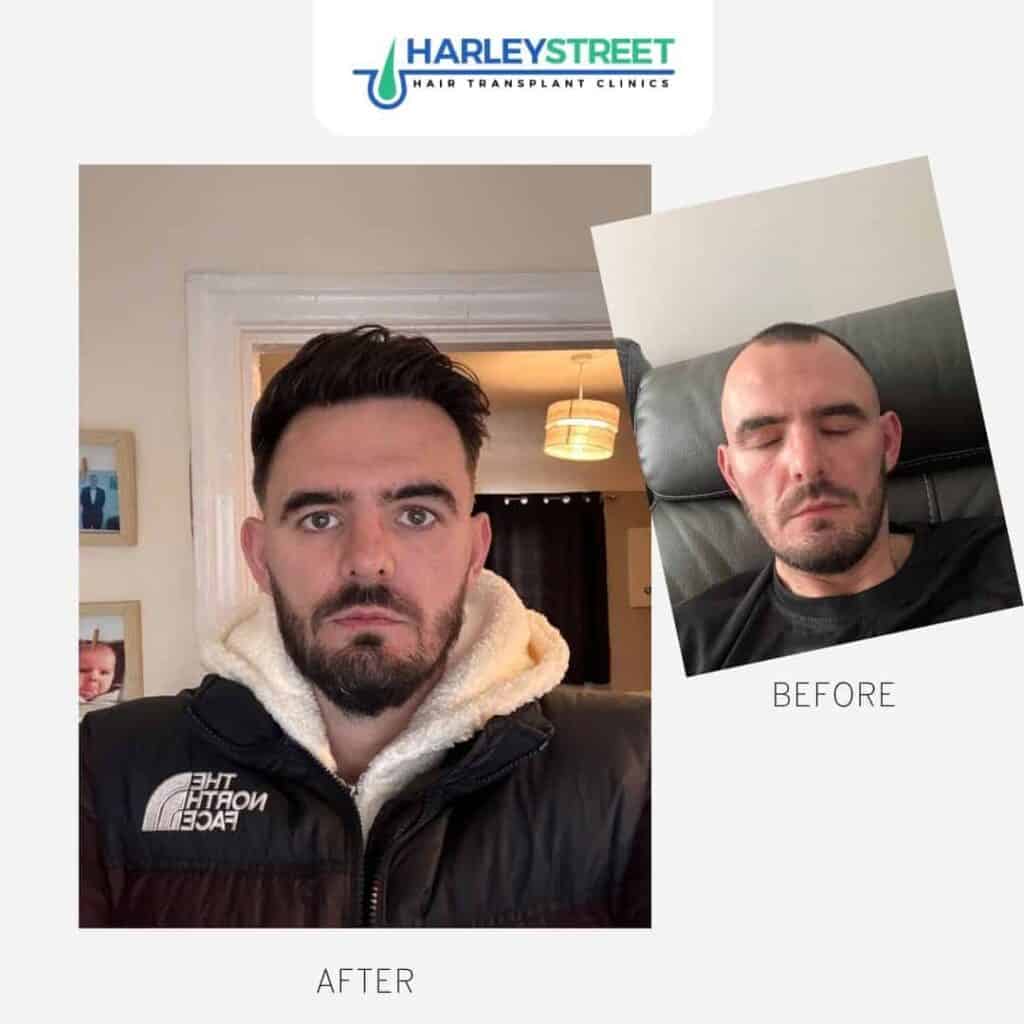
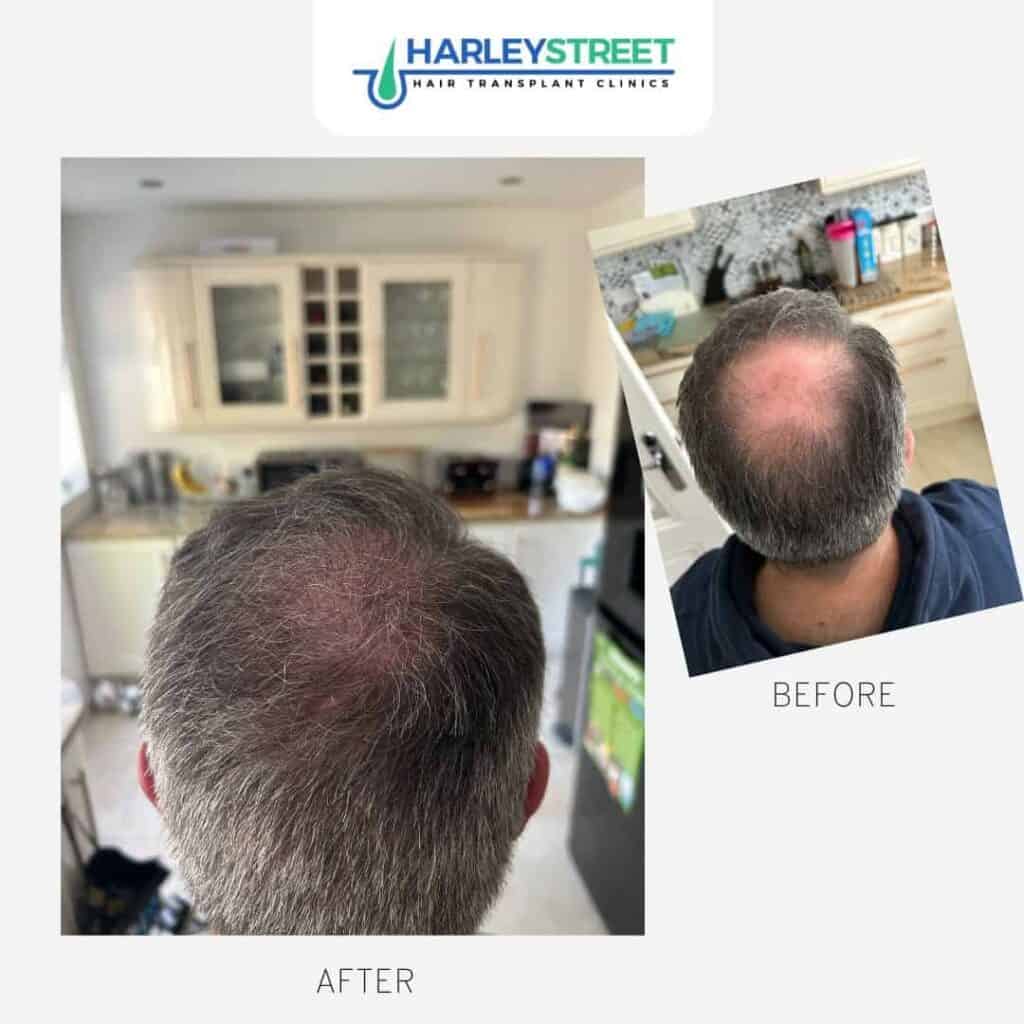
Before and After FUT Hair Transplant Results in Leeds
A selection of results from patients treated at our Leeds clinic. All procedures were performed by our GMC-registered surgeons.
How Does a FUT Hair Transplant Work?
Consultation and Planning
Before surgery, you meet your surgeon to plan the hairline or recipient area design and assess the donor strip location. The strip width and length are determined by the graft count required.
Strip Extraction
Local anaesthetic is administered to the donor area. A narrow strip of skin, typically 1 to 1.5 cm wide, is excised from the occipital region at the back of the head. The wound is closed with sutures or staples by the surgeon. The resulting scar is linear and horizontal, generally 15 to 30 cm in length depending on the graft count. It heals beneath any hair of normal length.
Graft Preparation
The excised strip is immediately passed to the surgical team, who work under magnification to dissect it into individual follicular units. This is one of the most technically demanding and time-consuming parts of FUT. The quality of dissection directly affects graft survival rates, which is why microscope-assisted dissection by an experienced team matters.
Incision and Implantation
Once the grafts are prepared, the surgeon makes thousands of small incisions in the recipient area. The surgical team then implant the grafts into these sites. The incision pattern determines the angle, direction, and density of the final result. The implantation phase is the same as in an FUE procedure.
Recovery
The donor site sutures are typically removed 10 to 14 days after surgery. There is more tension in the donor area initially than with FUE. Recovery in the recipient area follows the same timeline: shock loss between weeks 2 and 6, initial growth at months 3 to 4, meaningful coverage by months 6 to 9, and full results by 12 months.
FUT vs FUE: Which is Right for You?
The choice between FUT and FUE comes down to three factors: the extent of hair loss, how the patient wears their hair, and donor density.
FUE is preferred for most patients. It leaves no linear scar and has a slightly shorter initial recovery. It is suitable for patients who want to keep their hair short or who want the option to shave their head without any visible scarring at the donor site.
FUT is preferred when a very large graft count is required in a single session, when donor density is limited and yield per cm squared matters, or when the patient consistently wears their hair long and the linear scar will be fully concealed. FUT also has a slight advantage in graft survival rate because the follicles spend less time outside the body during the faster dissection process compared to individual punch extraction.
Some patients with previous FUE surgery who have limited remaining donor density benefit from FUT as a second procedure, harvesting from the same donor zone using a different technique. For patients considering a hairline hair transplant or crown hair transplant, your surgeon will advise which method or combination is appropriate at consultation.
Make the best investment in yourself and find out more about how we can help eliminate hair loss for good!
Cost of FUT Hair Transplant Surgery in Leeds
FUT hair transplant costs at our Leeds clinic start from £4,000 and range up to £8,000 for larger cases. The exact cost depends on the number of grafts required and the complexity of the surgery. Our pricing reflects a surgeon-led approach (the surgeon performs all critical steps, not a technician team), a one-patient-per-day-per-surgeon policy, and the limited availability of FUT-qualified surgeons in the UK.
Finance plans are available, allowing you to spread the cost over 12 months at 0% APR. Full details on our hair transplant cost page.
FUT Recovery: What to Expect
The donor site will feel tight and tender. Sleep elevated to reduce swelling. The recipient area crusts in the same way as after FUE. Keep both areas dry and follow the saline spray protocol for the recipient zone. Avoid any physical activity that raises blood pressure.
Sutures are removed at 10 to 14 days. Shock loss in the recipient area begins between weeks 2 and 6 and is normal. The donor scar will be pink initially and will fade over 3 to 6 months to a fine white line. Keep the scar out of direct sunlight for at least 3 months.
Growth begins around months 3 to 4. Density becomes more visible from month 6 onward. The donor scar continues to mature and narrow during this period. Any residual redness in the scar typically resolves by month 6.
Full results visible by month 12. The donor scar is fully matured and at its narrowest. A well-executed FUT scar should not be visible with hair at a normal length. At 12 months your surgeon assesses the result and discusses any further work.
A Selection of Our Before and After Results
Make the best investment in yourself and find out more about how we can help eliminate hair loss for good!
FAQs
Yes, for specific patients. FUT remains the better choice when a very large graft count is required in one session, when donor density makes FUE impractical, or when the patient wears their hair long and the linear scar will be hidden. It is not the right choice for patients who want to keep their hair short at the donor site.
FUT leaves a linear scar at the back of the head. In the hands of an experienced surgeon using trichophytic closure technique, this scar is typically 1 to 2mm wide and sits beneath any hair of normal length. It is not visible with hair of grade 2 or above. It is not appropriate for patients who want to shave their head.
A single FUT session can typically yield 2,500 to 4,000 grafts or more, depending on the strip dimensions and the patient’s follicular density. This is the primary advantage over FUE for patients needing very large sessions.
Yes. Patients who have previously had FUT and still have sufficient donor density can have FUE as a second procedure. FUE can also be used to harvest grafts from outside the original strip zone or to place grafts into the linear scar to reduce its visibility.
FUT is often the preferred method for female patients because they typically wear their hair long, which conceals the linear scar completely. Women do not generally need to shave the donor area for FUT, making the procedure less disruptive. Your surgeon will assess whether FUT or FUE is more appropriate at consultation.
FUT typically takes 6 to 8 hours. The extraction phase is shorter than FUE because the strip is removed quickly, but the dissection phase adds time. Overall the total procedure duration is similar to a comparable FUE session.

Where to Find Us
Hair Transplant Leeds
2 Wellington Place,
Leeds,
LS1 4AP
Appointments required. No walk-ins.
Monday to Friday: 9am to 8pm
Saturday and Sunday: 9am to 5pm
Patient Testimonials
We don’t just focus on outstanding results. We stay closely connected with our patients before, during, and long after their hair transplant. That continuity keeps patients informed, calm, and in control at every stage. Our team is always available to offer clear guidance, reassurance, and expert aftercare. It’s this level of ongoing support that our patients consistently say sets us apart from other clinics.
You can read our great reviews of FUE hair transplants over on Google and Trustpilot