Method: FUE
Approach: Doctor-led Procedure
Surgeons: GMC, ISHRS Registered
Cost: £3,500 – £6,500
Grafts: Based on patient’s beard hair loss
Beard Transplant




GMC-Registered Surgeons
Every procedure at Hair Transplant Leeds is performed by a doctor on the GMC register
Leeds City Centre Clinic
Centrally based and easy to reach from across Yorkshire and the surrounding region
Free Consultation, No Sales Pressure
An honest look at your hair loss and what surgery can realistically achieve for you
One Surgeon, One Patient Per Day
Your surgeon focuses solely on your procedure, undivided attention from the first incision to the last graft
At Hair Transplant Leeds, beard transplants are performed using the same FUE and DHI techniques used for scalp restoration. The principles are the same; the complexity is higher. The beard area is anatomically demanding because each zone of the face (moustache, chin, cheeks, jaw, and neck) grows at a different angle and direction. Getting this right is what makes the difference between a beard that looks transplanted and one that does not.
Beard Transplant in Leeds
A beard transplant takes hair follicles from the donor area at the back and sides of the scalp and implants them into areas of the beard that are sparse, patchy, or absent. The transplanted follicles continue to grow as beard hair after the procedure and are permanent.
Beard transplants address several different presentations: patchy beard growth caused by genetics, scarring from acne or injury that prevents local hair growth, alopecia barbae (beard-specific alopecia areata), and deliberate beard design where the patient wants a defined shape they cannot currently achieve naturally.
The graft count for a beard transplant is lower than for a full scalp procedure. A full beard from sparse growth typically requires 1,500 to 3,000 grafts. Filling specific patches or defining the beard line may require 500 to 1,500. Beard transplant costs at our Leeds clinic start from £3,500.
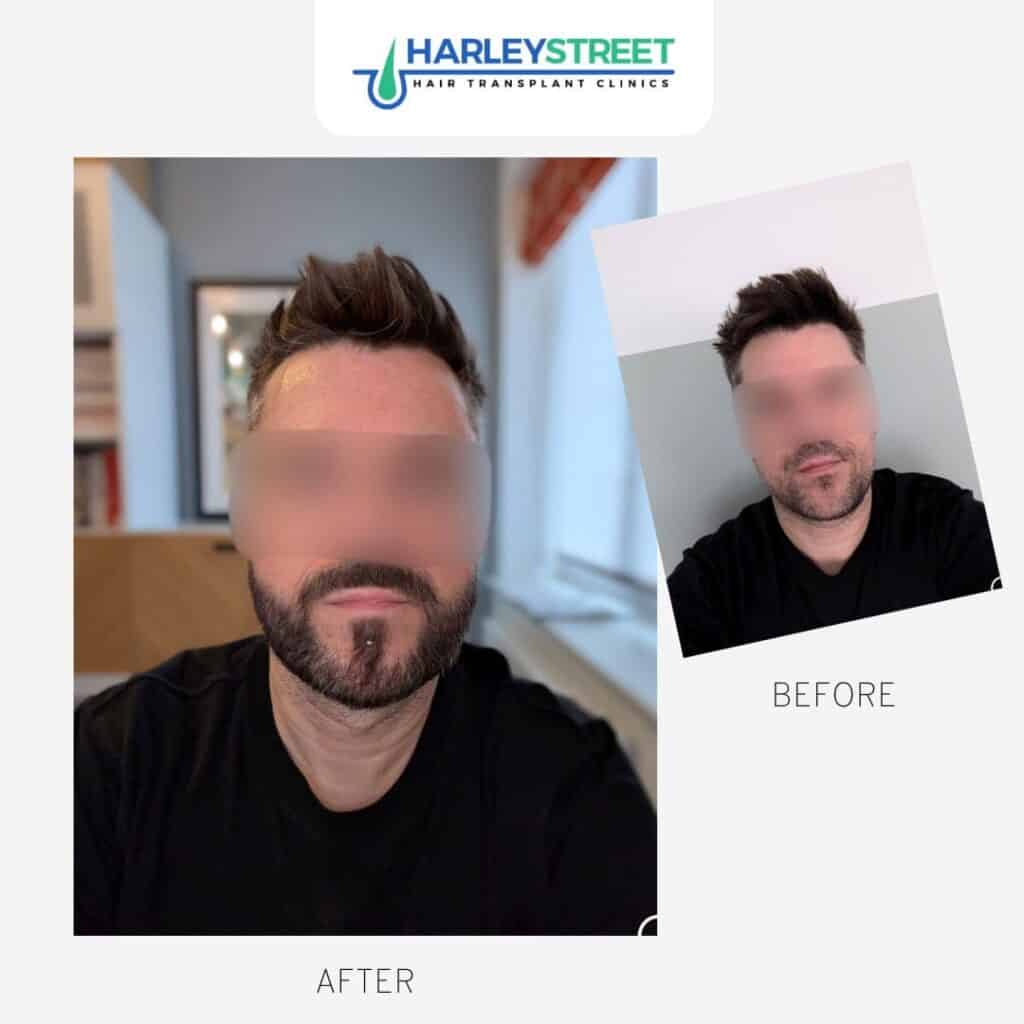
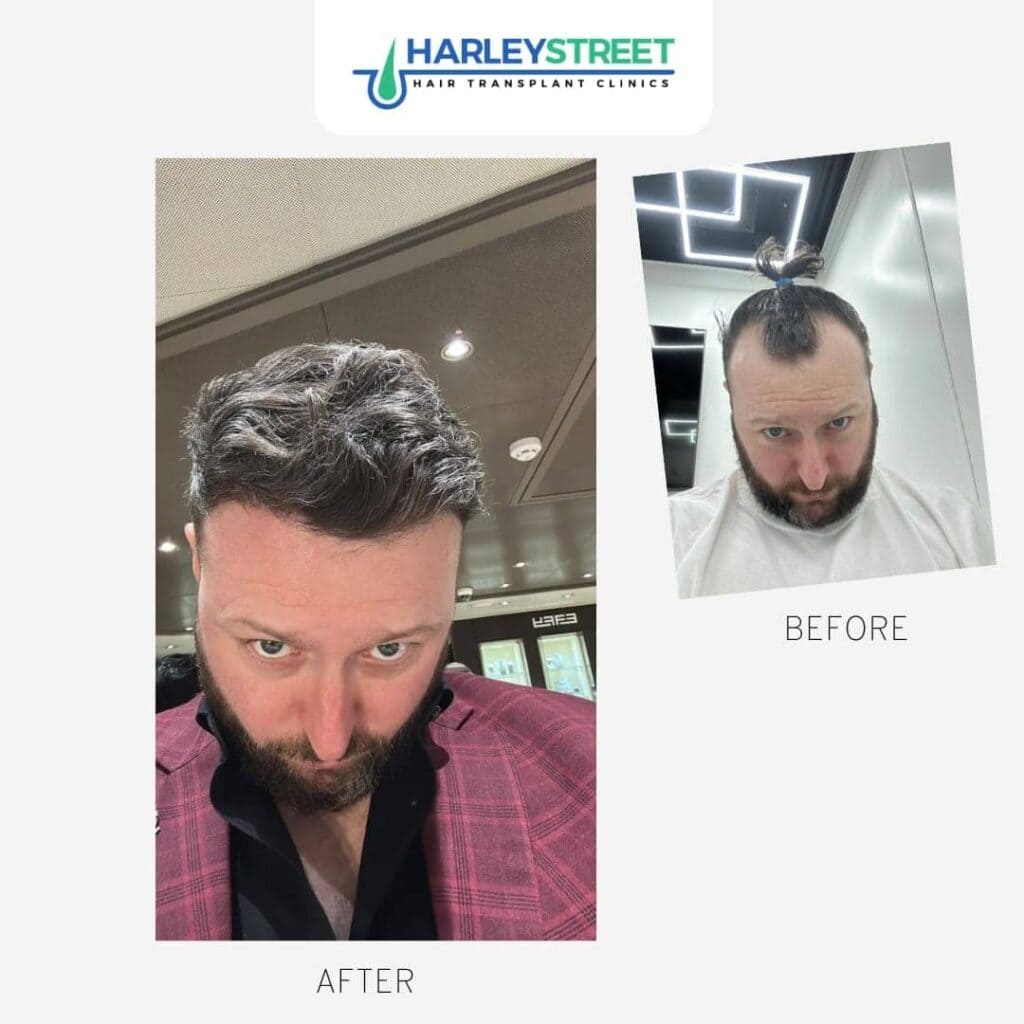
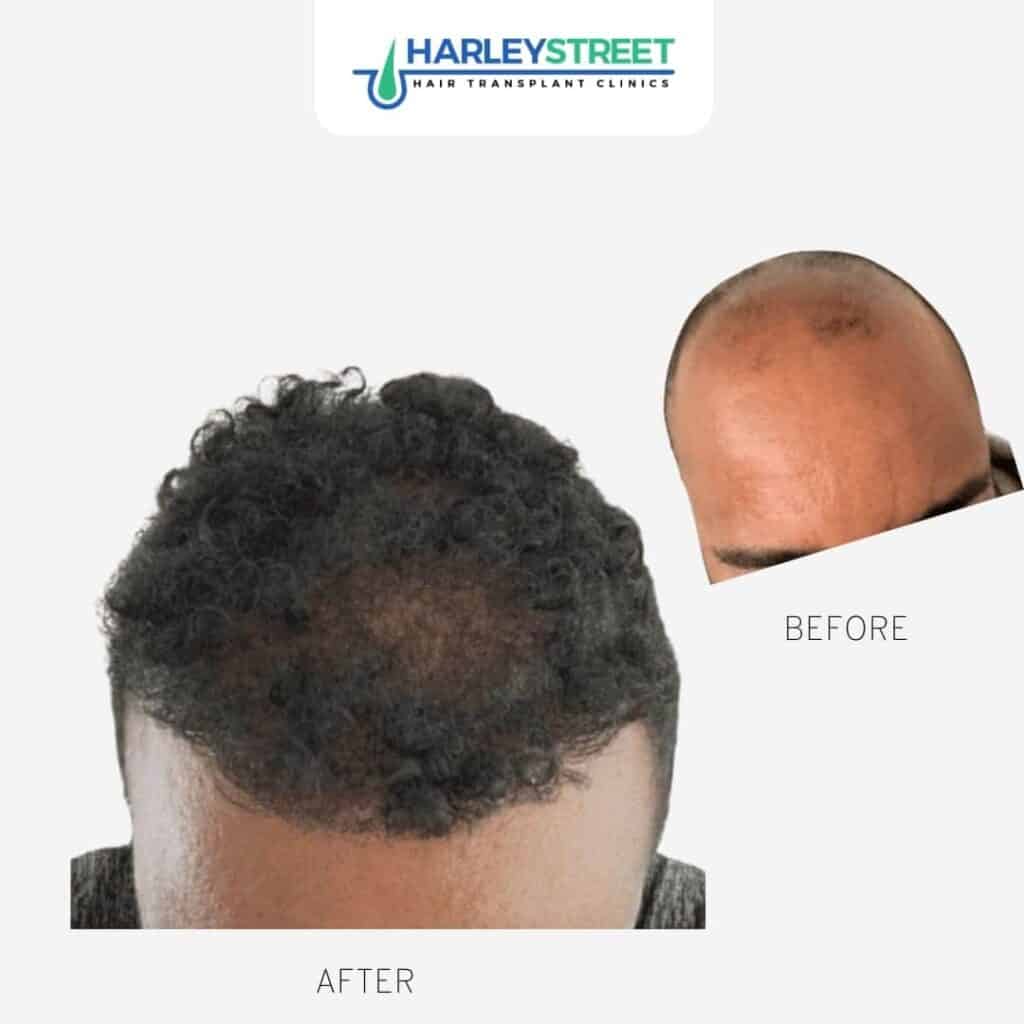
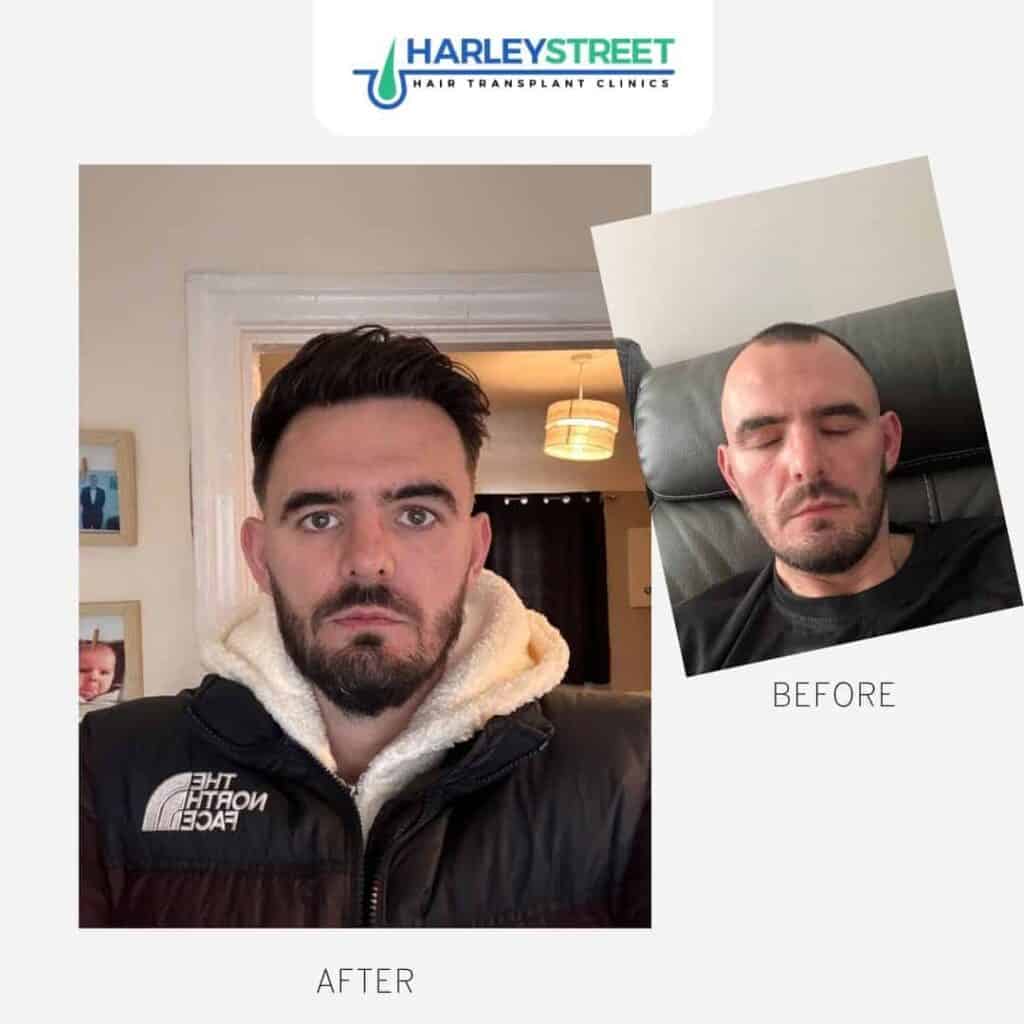
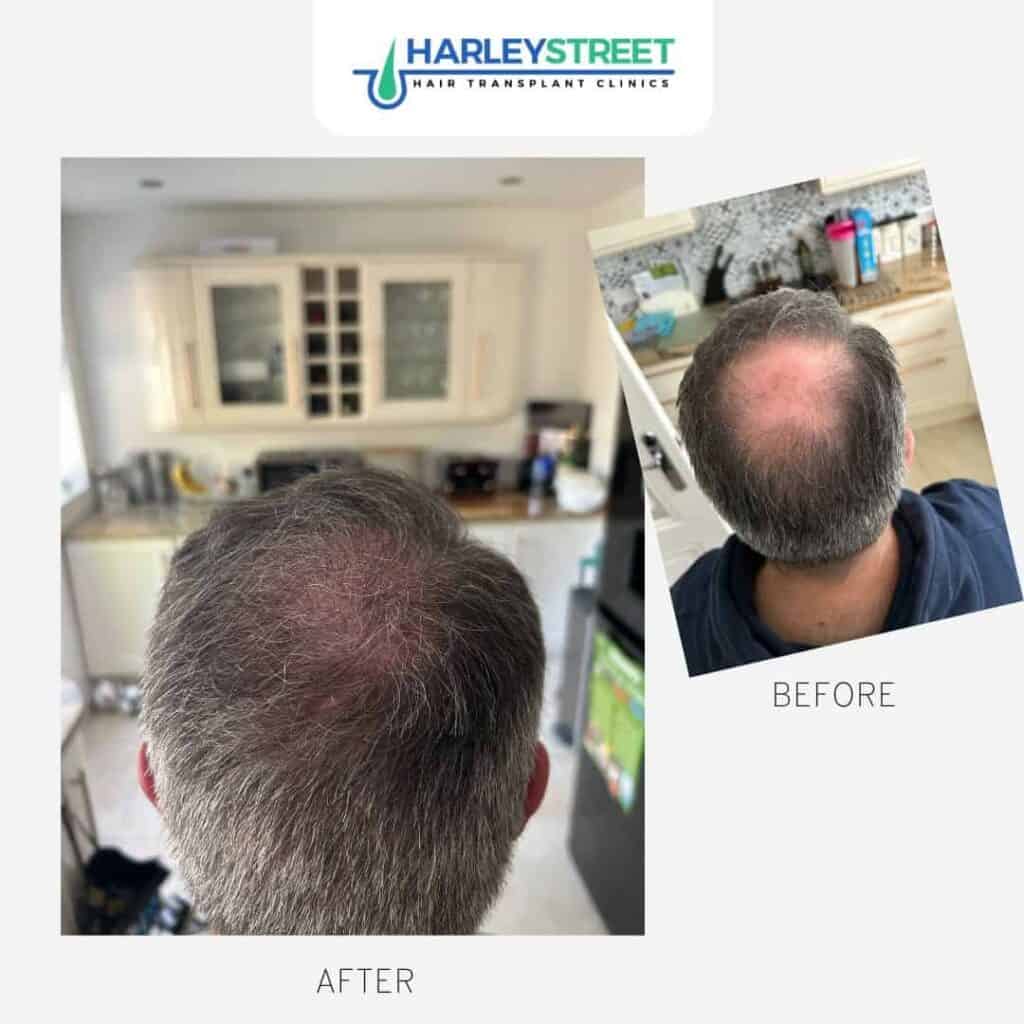
Before and After Beard Transplant Results in Leeds
A selection of results from patients treated at our Leeds clinic. All procedures were performed by our GMC-registered surgeons.
Beard Zone Anatomy: Why Angle Control Matters
The beard is not a single zone growing in one direction. Each area of the face has a distinct growth pattern:
The moustache grows downward and outward from the philtrum, with hairs angled acutely toward the skin surface.
The chin area grows primarily downward, with hairs following a more vertical angle than the upper lip.
The cheek area grows in a lateral and slightly downward direction, following the skin contour.
The jaw and sideburn area transitions between the scalp donor hair growth direction and the beard growth pattern.
A surgeon who treats all zones identically will produce a result where some areas look natural and others look stiff or artificial. At our Leeds clinic, the incision direction in each zone is planned specifically for that zone’s anatomy before a single graft is placed.
DHI is frequently the preferred technique for beard work because the Choi implanter pen gives the surgeon direct control over the angle and direction of each graft at the moment of implantation. For a hairline hair transplant the same principle applies: precise angle control at each implantation site produces a natural result.
The Beard Transplant Design Consultation
Before any surgical planning begins, a detailed design consultation takes place with your surgeon. This covers:
The desired shape and density of the finished beard. Whether you want a full beard, a goatee, a defined jawline only, or a specific style, the design is agreed in detail before any surgery is planned.
Assessment of your existing beard hair. Existing growth is mapped to understand which zones have viable follicles and which do not, and to plan implantation that blends with native hair rather than creating a visible zone boundary.
Assessment of the donor area. The back and sides of the scalp are evaluated for density, follicle calibre, and available graft count. Beard transplants use the same donor pool as scalp surgery, so any existing or planned scalp work is factored in.
For patients considering both a crown hair transplant and beard work, the donor budget must be allocated appropriately across both areas before either procedure is planned.
Make the best investment in yourself and find out more about how we can help eliminate hair loss for good!
Beard Transplant Cost in Leeds
Beard transplant costs at our Leeds clinic start from £3,500. Full beard restoration from sparse growth typically costs between £4,500 and £6,000 depending on graft count and the complexity of the design. Smaller patch-filling procedures start from £3,500.
We do not use a per-graft pricing model. The cost is based on the scope of work, the number of zones being treated, and the graft count required. Finance plans are available at 0% APR over 12 months. Full details on our hair transplant cost page.
Beard Transplant Recovery
The beard area will be red and slightly swollen. Small crusts form around each implanted follicle. Sleep on your back with your head elevated. Do not shave, scratch, or apply any product to the beard area. Saline spray is applied to the recipient area as instructed.
Crusting resolves by day 10 to 14. Shock loss occurs between weeks 2 and 6: the implanted hairs fall out. This is normal and expected. The follicles remain intact below the skin and will produce new growth. You can shave gently from day 10 to 14.
New beard hair begins to emerge around months 3 to 4. Growth is often finer initially and thickens over time. By months 6 to 9 the density and distribution of growth gives a clear picture of the final result. The beard can be shaped and groomed normally throughout this phase.
Full beard transplant results are visible by month 12. The transplanted hairs have thickened and the density is at its maximum. At the 12-month follow-up your surgeon will review the result and discuss any fine-tuning if required.
A Selection of Our Before and After Results
Make the best investment in yourself and find out more about how we can help eliminate hair loss for good!
FAQs
Graft count depends on the size of the area and the density you want to achieve. Filling specific patches may require 500 to 1,000 grafts. A full beard from minimal growth typically needs 1,500 to 3,000. Your surgeon will give you a precise count at consultation after assessing the recipient zones and existing growth.
Yes, when performed correctly. The critical factor is the angle and direction of each implanted follicle, which must match the natural growth direction of each specific beard zone. A surgeon who plans zone-by-zone incision angles produces results that are indistinguishable from natural growth. Ask to see before and after results at your consultation.
Yes. From around day 10 to 14 you can shave gently. After month 3 the transplanted hairs can be groomed and styled normally. The transplanted hair is permanent and behaves like normal beard hair, including continued growth requiring regular trimming.
Yes. Donor hair is taken from the same area used for scalp transplants: the back and sides of the head. The calibre of scalp hair is similar to beard hair for most patients, and the transplanted follicles adapt to their new environment over the first few months of growth.
DHI is often preferred for beard transplants because the Choi implanter pen gives the surgeon direct control over the angle and direction of each graft at the moment of implantation. In areas like the moustache and chin where precise growth direction is critical, this level of control produces more natural results. Your surgeon will confirm the approach at consultation.
Yes. FUE can be used to place grafts into or around scar tissue in the beard area where follicles have been destroyed. The success rate depends on the blood supply and skin quality at the scar site. This is assessed at consultation.

Where to Find Us
Hair Transplant Leeds
2 Wellington Place,
Leeds,
LS1 4AP
Appointments required. No walk-ins.
Monday to Friday: 9am to 8pm
Saturday and Sunday: 9am to 5pm
Patient Testimonials
We don’t just focus on outstanding results. We stay closely connected with our patients before, during, and long after their hair transplant. That continuity keeps patients informed, calm, and in control at every stage. Our team is always available to offer clear guidance, reassurance, and expert aftercare. It’s this level of ongoing support that our patients consistently say sets us apart from other clinics.
You can read our great reviews of FUE hair transplants over on Google and Trustpilot