
Method Used: FUE
Approach: Surgeon-Performed
Cost: £3,000 – £7,000
Finance Available
Crown Hair Transplant




GMC-Registered Surgeons
Every procedure at Hair Transplant Leeds is performed by a doctor on the GMC register
Leeds City Centre Clinic
Centrally based and easy to reach from across Yorkshire and the surrounding region
Free Consultation, No Sales Pressure
An honest look at your hair loss and what surgery can realistically achieve for you
One Surgeon, One Patient Per Day
Your surgeon focuses solely on your procedure, undivided attention from the first incision to the last graft
Crown Hair Transplant Leeds
A crown hair transplant is a surgical procedure designed to treat hair thinning and hair loss on the top (crown) of the head. Hair follicles are taken from the back and sides of the head (donor area) and transplanted into the crown area. Crown hair transplants in Leeds typically cost between £4,500 and £6,500. Book your free consultation today!
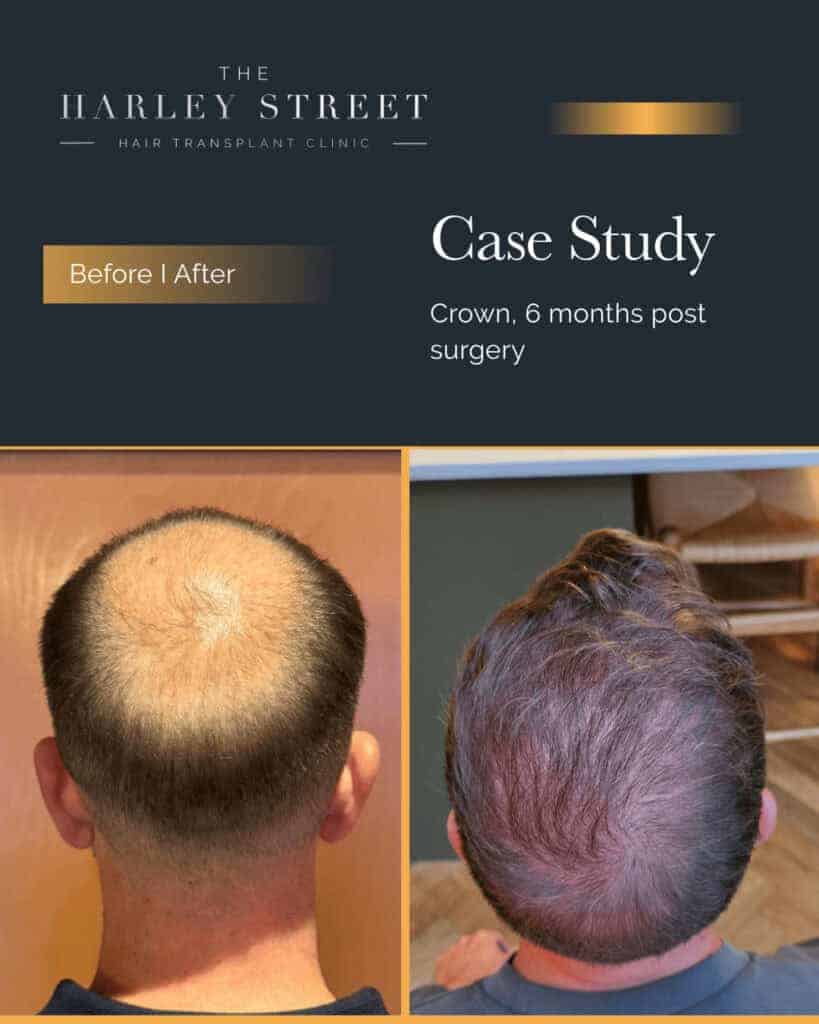
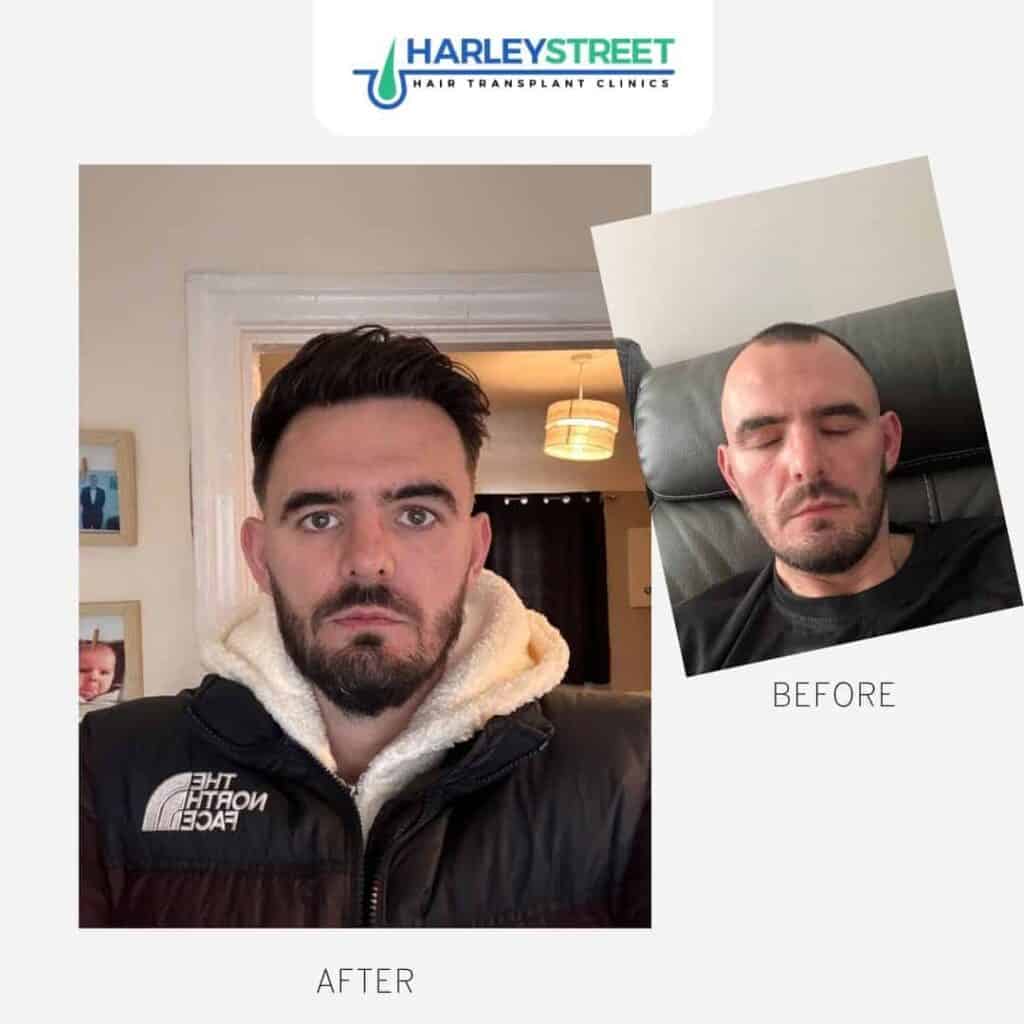
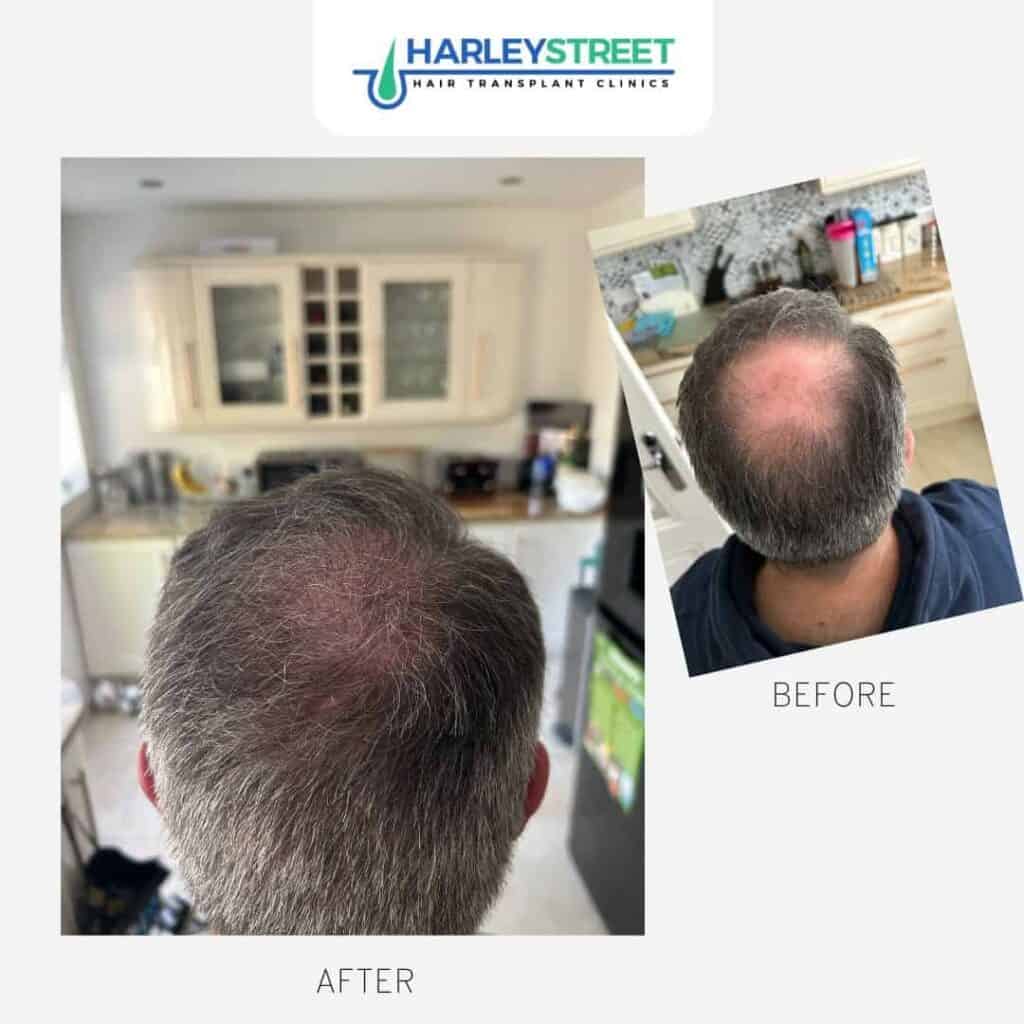
Before and After Crown Hair Transplant Results in Leeds
A selection of results from patients treated at our Leeds clinic. All procedures were performed by our GMC-registered surgeons.
What is a Crown Hair Transplant?
Crown hair transplants are a common surgical procedure that increases the density and thickness of hair on the crown of the head. This is done by extracting hair follicles from the back and sides of your head (donor area) and implanting them into your crown (recipient area).
Crown surgeries are a viable option for men who are suffering from medium to severe cases of a condition called male pattern baldness. In comparison to other hair loss treatments that may not be suitable for larger cases of hair loss (such as minoxidil or PRP therapy), a crown hair transplant is suitable for all patients.
A crown hair transplant is a long-term solution to hair loss on the top of the head. By having surgery and maintaining a great aftercare routine, your transplanted hair will grow for many years after the surgery, hiding any signs of hair loss.
At the Leeds Hair Transplant Clinic, all hair transplant procedures are performed by qualified hair transplant surgeons in a CQC-registered clinic. Our surgeons are Dr. Mohammed Ditta (GMC: 7084372) and Dr. Aziz Elgindi (GMC: 7450896).
How Does a Crown Hair Transplant Work?
At the Leeds Hair Transplant Clinic, most crown procedures are performed using the FUE hair transplant method. Although, DHI (Direct Hair Implantation) may be recommended in some circumstances.
As with any hair transplant procedure, the aim is to take hair follicles that are resistant to hair loss from the back and sides of the head (donor area) and implant these into areas that need them (recipient site). In this instance, the recipient site is the crown area, located on the top of the head.
Initial Consultation and Anaesthesia
On the day of your procedure, you will first have a pre-surgery consultation. During this, our doctor will walk you through the surgical procedure, introduce you to the surgical team, and answer any questions you may have.
From here, we will plan and design the crown restoration with precision, enabling you to make any final adjustments or requests before the surgery takes place. You will then be given a small amount of local anaesthesia to numb the extraction and implantation site.
Extraction Phase
During the extraction phase, viable hair follicles are taken from the donor area on the back and sides of your head. The surgeon and team will extract the exact number of grafts needed to provide you with a natural-looking and full result. The exact number of grafts depends on the size of the crown area requiring surgery. Most patients require between 1,500 and 2,500 grafts.
During this phase, each hair follicle is counted and categorised as a single, double, or triple graft. Single and double grafts tend to be placed at the outer edges of the crown area to blend seamlessly with existing hair. Triple grafts provide the most density and are implanted into the baldest part of the crown.
Incision Phase
After extraction, the incision phase takes place. The surgeon makes many small incisions into the crown area to enable the transplanted hair to be implanted. The key is for these incisions to follow the natural direction of hair growth , which is typically circular in the crown , so that when the hairs are implanted, they grow in a natural pattern.
This phase requires immense precision and skill, as it determines the overall appearance of your result after surgery.
Implantation Phase
After the incision phase, your new hair grafts are carefully implanted. The number of grafts required has been carefully planned and corresponds to the number of incisions made by the surgeon. When done correctly, the implantation phase leaves minimal scarring and enables you to return to your normal routine as quickly as possible.
Post-Surgery
Once the surgery is over, the hair transplant surgeon will walk you through your aftercare process for the next 10–14 days and provide you with a full aftercare package, containing: antibiotics, specialised shampoo, a supporting neck pillow, a sponge, a saline spray bottle, paracetamol, a headband, and aftercare instructions.
How Much is a Crown Hair Transplant in Leeds?
At the Leeds Hair Transplant Clinic, a crown hair transplant typically costs between £4,500 and £6,500. However, the cost of the transplant is dependent upon the hair transplant technique used and the size of the crown area that requires surgery.
To help fund your crown hair transplant, we offer finance plans to all patients. You can pay for your crown transplant over 12 months at a 0% APR rate, or spread the cost over a longer period if preferred.
Make the best investment in yourself and find out more about how we can help eliminate hair loss for good!
Why Get a Crown Hair Transplant?
In the UK, 50% of all men by the age of 50 suffer from some form of hair loss. With over 800,000 people living in Leeds, crown thinning is a prevalent issue that affects many men’s appearance and confidence.
At first glance, a crown hair transplant may seem like a drastic solution to a small amount of thinning. However, when left untreated, crown hair loss typically worsens over time, leading many men to feel self-conscious about their appearance , particularly when viewed from above or in certain lighting.
Crown thinning is most commonly caused by male pattern baldness (androgenetic alopecia), a hereditary condition influenced by DHT sensitivity. Once it has started, it will worsen over time without treatment. A crown hair transplant permanently restores hair in the affected area using your own DHT-resistant donor follicles , the only long-term solution available.
How Do I Know I Need a Crown Hair Transplant?
It can often be difficult to know exactly when the right time for a crown hair transplant is. Some men experience thinning on the crown from a young age, whilst others may also have a receding hairline.
The easiest way to assess whether you require a crown transplant is to first evaluate how much hair you are losing on a daily basis. It is completely normal to lose between 50 and 150 hairs per day as part of the natural hair growth cycle. However, when hair loss exceeds what the follicle can replace, this becomes a hair loss condition.
Take note of how much hair you are losing from the crown when you wake up, shower, or brush your hair. If you notice excessive shedding and visible thinning on the crown when looking in a mirror, book yourself in for a free consultation.
What Surgical Method is Best for a Crown Hair Transplant?
There are two main hair transplant methods used to treat crown hair loss at our Leeds clinic: the FUE technique and the DHI method. Both are minimally invasive, leave no linear scar, and produce graft uptake results of between 95–98%. FUT (strip surgery) is generally not recommended for crown restoration due to the increased scarring and recovery time involved.
Follicular Unit Extraction (FUE)
FUE is the most popular hair transplant method at UK clinics. It involves taking individual hair follicles from the back and sides of the head and implanting them one by one into the crown area.
This method is suitable for all crown hair loss cases, from mild to severe. FUE hair transplants in Leeds leave minimal scarring, have an initial recovery period of 10–14 days, and produce natural-looking results.
Direct Hair Implantation (DHI)
DHI is a refined approach to hair transplantation that builds upon the FUE method. Using a CHOI implanter pen, the surgeon can extract and implant the hair follicle almost simultaneously , reducing the time each follicle spends outside the skin and improving graft survival rates.
A DHI crown hair transplant offers a slightly quicker procedure and recovery in some cases when compared to standard FUE. At the Leeds Hair Transplant Clinic, a DHI hair transplant is recommended in specific cases where maximum density and precision are required.
Meet Our Team

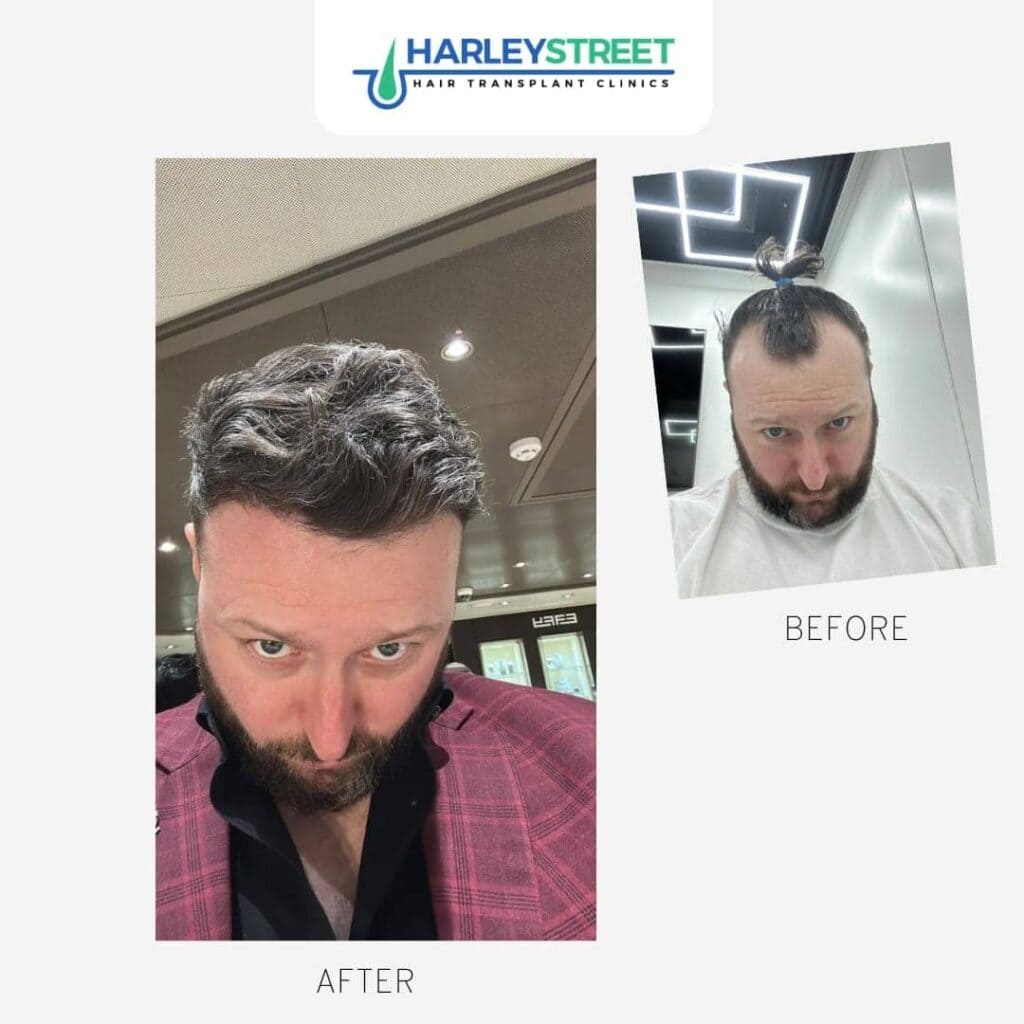
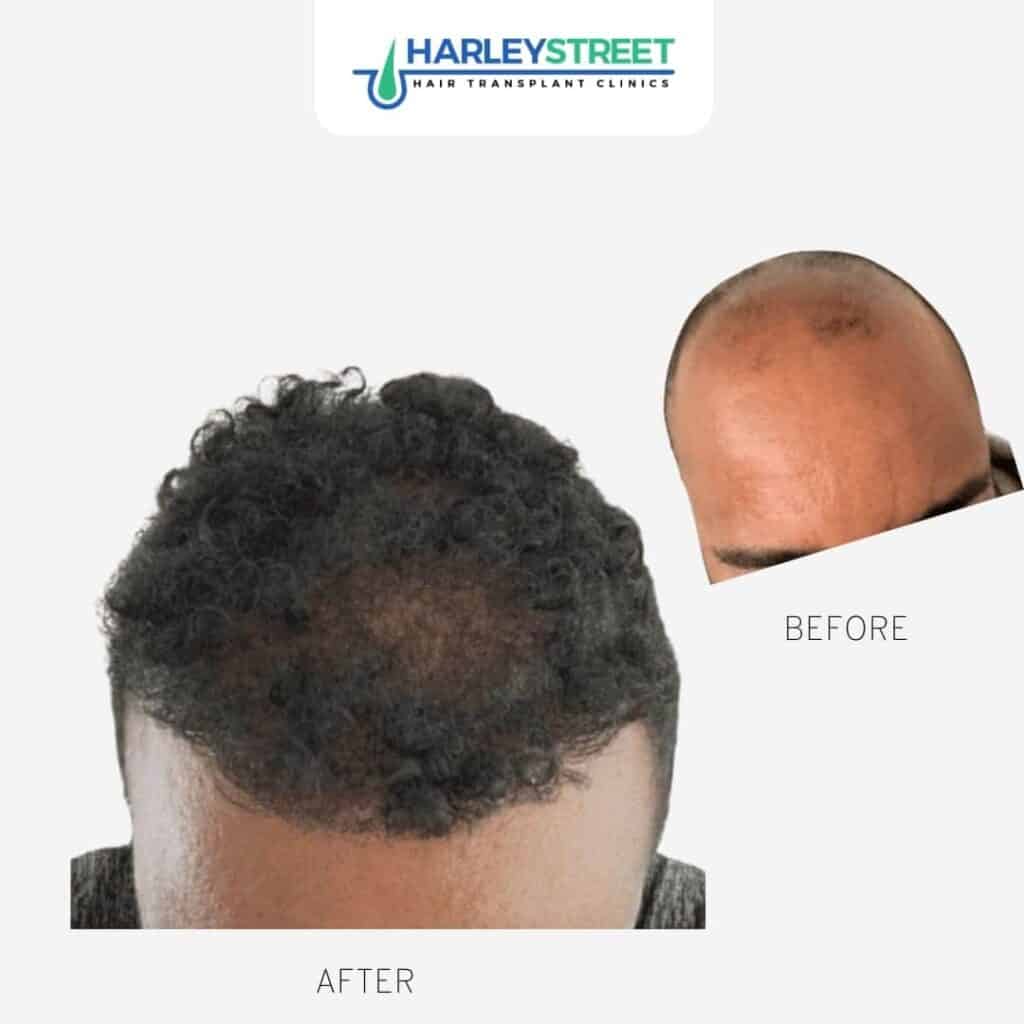
A Selection of Our Before and After Results
Make the best investment in yourself and find out more about how we can help eliminate hair loss for good!
Where is the Leeds Clinic Located?
The Leeds Hair Transplant Clinic is located in the city centre of Leeds. The address is:
Hair Transplant Leeds
2 Wellington Place,
Leeds,
LS1 4AP
Please note: An appointment is required as we don’t accept walk-ins.
Our opening hours are:
Monday: 9am–8pm
Tuesday: 9am–8pm
Wednesday: 9am–8pm
Thursday: 9am–8pm
Friday: 9am–8pm
Saturday: 9am–5pm
Sunday: 9am–5pm
Frequently Asked Questions
A crown hair transplant uses follicles from the donor area at the back and sides of the scalp, which are then implanted into areas of thinning or loss. All procedures at our Leeds clinic are performed by GMC-registered surgeons.
Most patients return to work within a few days. The transplanted hairs shed at around 2 to 4 weeks, which is normal. New growth begins at 3 to 4 months and the majority of the final result is visible by 9 to 12 months.
The procedure is performed under local anaesthetic. Most patients experience minimal discomfort during the treatment. Some tenderness in the donor and recipient areas is normal in the first few days after surgery.
The cost depends on the number of grafts required. Your patient advisor will provide an exact quote during your free consultation. Finance options are also available.
The best way to confirm suitability is through our free consultation. Your surgeon will assess your donor density, the extent of your hair loss, and discuss realistic outcomes before recommending treatment.
Graft counts depend on the area to be treated and the degree of hair loss. Typical procedures range from 1,000 to 3,000 grafts. Your surgeon will give you an accurate estimate at your free consultation.
Patient Testimonials
We don’t just focus on outstanding results. We stay closely connected with our patients before, during, and long after their hair transplant. That continuity keeps patients informed, calm, and in control at every stage. Our team is always available to offer clear guidance, reassurance, and expert aftercare. It’s this level of ongoing support that our patients consistently say sets us apart from other clinics.
You can read our great reviews of FUE hair transplants over on Google and Trustpilot