




How Do Hair Transplant Procedures Work?
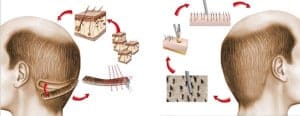
A hair transplant is the most effective, clinically proven solution for hair loss. Male pattern baldness is a problem that will affect up to 30% of all men by the time they’re thirty years of age, moving to 50% of men by the time they’re 50.
It is a surgical treatment that includes the removal of hair follicles (also called grafts) from the donor area of your scalp (which is typically the sides and back of your head) and then transplanting them to the areas that require them. This process is also used for beard and eyebrow transplants.
What Happens During a Hair Transplant?
If you think that a hair transplant might be the solution you’re looking for, then it only stands to reason that you’d want to know a little something about what you’re getting into ahead of time. Let’s take a closer look at what the process is all about.
If you’re balding, you’re no doubt aware of the fact that you’re losing your hair at the front of your hairline, as well as the temples. Most men fighting baldness also experience hair loss on the tops of their head. However, the hair on the back and around the sides of the head tends to remain lush and growing in the same way the man is used to. This hair is known as donor dominant hair.
Hair transplants involve putting the patient under local anesthesia before taking portions of donor dominant hair and surgically transferring them to the parts of the head where balding and thinning has occurred. Due to the highly advanced technical equipment used during the procedure, combined with the anesthetic effects, very little to no pain is felt by the patient.
The hair has the ability to grow just as well once transplanted as it did in its original placement, allowing the balding man to restore the look and feel of his once full head of hair.
Types of Hair Transplant Procedures
There are, of course, several different types of hair transplant procedures you can choose. Which one is right for you will depend on your unique situation, as well as the recommendations of your our specialists.
- Follicular Unit Extraction (FUE): This method is one of the simplest and most popular when it comes to hair transplants. FUE involves transferring living donor dominant hair in groups of two or three strands at a time. Normal, healthy human hair naturally grows in patterns that are very similar to this, so FUE allows for a natural, lifelike look. FUE is also widely preferred because the surgical cuts involved are minor, resulting in shorter recovery times and minimal scarring. (We HIGHLY Recommend this)
- Follicular Unit Transplant (FUT): This method is most often used to treat more advanced or extreme cases of balding. It involves removing sections of the donor dominant hair in strips and transferring these strips to the balding areas via grafting. Cuts are then closed with sutures. Naturally, the FUT method is going to call for a longer healing time, especially if the procedure involves the performance of several grafts at one time.
- Direct Hair Implant Technique (DHI): The DHI technique is one of the newer, more innovative hair transplant methods prevalent today. It is also considered the most advanced option by many modern healthcare professionals. It involves extracting living hair follicles one by one and redistributing them immediately via a patented DHI implantation tool. DHI tools typically have a diameter of 1 mm or less and provide a high degree of control when it comes to redistribution.
Which of the above methods ultimately represents the right one for you will depend on how bald you are, what you’re hoping to achieve with your results, and what your budget is. To better determine which would be the best possible option for your unique situation, fill out our form to get a free consultation with a hair implantation specialist today.
We will also provide you with a competitive quote on the treatment you need. From there, we can move forward together and determine a course of action.
Patient Testimonials
Aside from achieving fantastic results, we believe that keeping in touch with our patients before, during and after their hair transplantation procedure is paramount – it helps to keep our patients feeling calm and in control. We’re always on hand to provide guidance, support and aftercare advice. Time and again, our patients tell us that this is what sets us apart from other clinics.
You can read our great reviews of FUE hair transplants over on Google and TrustPilot
 Ryan A04/10/2023My experience so far has been very good. The staff were professional and friendly and put me at ease. The day went really smoothly - after the injections the whole procedure was pain free. Would recommend this practice.
 Abbigayle Pace29/09/2023I would like to thank James who has been amazing leading up to my surgery always answering my queries and getting back to me straight away. The day of the surgery the girls were so lovely and nice and made me feel very comfortable before and during the surgery. I am currently 5 weeks post off and so far everything going well thank you Harley street
 Jammiedodger 6226/05/2023I had my hair transplant in April and can honestly say the experience was the most pleasant. Everyone was professional and went to their utmost to make me feel comfortable and relaxed especially when they could tell how nervous I was. The skill of my surgeon and accompanying medical was without question the best. I healed quickly and near pain free due to their recommendation and knowledge. I would recommend harley Street to anyone considering a hair transplant and also to just arrange a call even if you're unsure as they will answer all your questions clearly and highly informative.
